
Research and Innovation
Innovating in the sanitation sector
SOIL's extensive research program is pushing the sanitation sector forward through innovative discovery, research, and design initiatives to better understand essential service delivery in complex, low-resource, urban communities.
Our research is focused on expanding sector knowledge and contributing to the global conversation on how to effectively respond to the worldwide sanitation crisis. SOIL's team partners with academic institutions to publish research findings and shares lessons learned at global conferences.
SOIL's Research Highlights

Household Subsidies
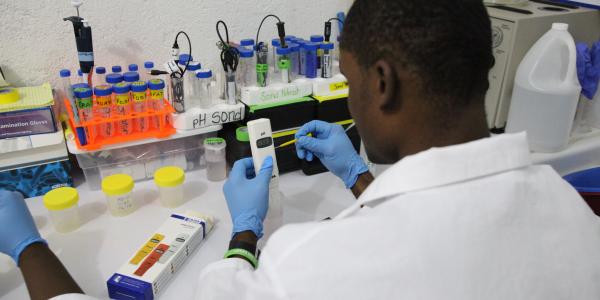
SOIL is testing the EquityTool, a country-specific wealth survey, to determine the effectiveness of its use for reliably helping to identify at-risk households that may be eligible for reduced fee options for the EkoLakay service.
Climate Finance
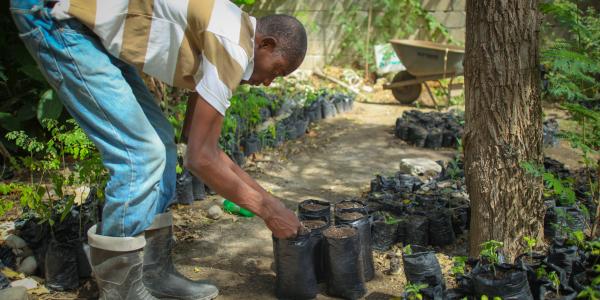
SOIL's waste treatment methodology is mitigating ~ 0.7MT of CO2eq per household per year. The SOIL team is exploring opportunities to turn this climate impact into revenue to support the household service.
Baseline Sanitation Survey
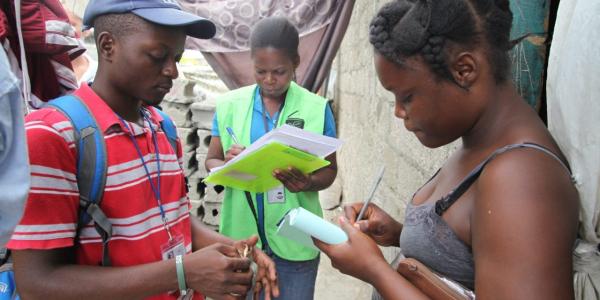
The collection of baseline sanitation data in high risk priority zones in the Cap Haitian region to understand sanitation ownership, access and household needs and strategies for equitable sanitation service offerings.
Results-Based Financing
In late 2023 SOIL is piloting an outcomes-payment model in partnership with other stakeholders. Outcome payments will be tied to increase in households on the service and positive sanitation behavior change.
Meet SOIL's Research Team

Maya Lubeck-Schricker
Maya holds an MS in Epidemiology from the University of Washington and specializes in study design and quantitative data analysis to strengthen evidence-based decision-making and address operational challenges within SOIL’s sanitation service. Her career in global health began at Tufts University, working with Dr. Ramnath Subbaraman on projects examining tuberculosis treatment adherence as well as associations between legal and water access in Indian slums. She later consulted for the Gates Foundation on initiatives spanning the burden of Shigella in the Americas, vaccine investment strategy, climate-related health risks, gender equity in health R&D, and the role of AI in global health. Maya now brings this cross-cutting research background to advancing safe, sustainable sanitation in Haiti and beyond.

Bridj Ozeris
After completing his dissertation at the Université Chrétienne du Nord d’Haïti (UCNH), where he explored the intersection of agronomy and social issues, Bridj developed a strong interest in environmental and social justice. This commitment led him to join SOIL in 2021 through the Black Soldier Fly Project, where he has continued to expand his research expertise, particularly in the field of sanitation in Haiti.
Miselie Fanor Pierre
Miselie began working in the WASH sector in 2014, supporting underserved communities and strengthening health institutions through organizations such as the American Red Cross and Save the Children. In 2023, she joined SOIL to further her work with vulnerable communities by advancing safe sanitation research and services.
Latest Blogs on SOIL's Research

Designing Data-Driven Sanitation Solutions: An Update on SOIL’s Climate Research
Container emptying As the devastating impacts of climate change continue to mount around us, especially in vulnerable frontline communities like the ones SOIL serves in Haiti, we’re more motivated than ever to grow SOIL’s climate positive sanitation solution, which transforms a public health crisis....

New Paper Digs into Process Costs of SOIL’s Regenerative Sanitation Service
Photo: Tony Marcelli Urban sanitation interventions have historically focused on sewers or onsite sanitation options, such as pit latrines and septic tanks, but as cities are expanding at staggering rates, it’s increasingly clear that these traditional technologies are infeasible and unsafe in most....

Saving Water, Twenty Million Gallons at a Time
Two things we know to be true about SOIL’s crew: we’re data driven to our core and we’re really passionate about poop (or about finding innovative ways to transform it from something that wreaks havoc on the environment and public health into something that combats climate change and grows more food....
New Research Demonstrates Safety of SOIL’s Waste Treatment Process
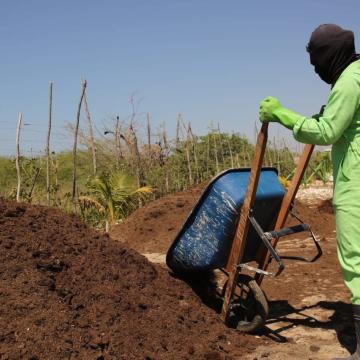
Photo: Vic Hinterlang SOIL is committed to fully treating 100% of the wastes from each and every household EkoLakay toilet – and we take that responsibility very seriously! Our treatment process has been developed alongside global experts and exceeds standards set by the World Health Organization....

Monitoring Meteorology in One of the World’s Most Climate-Vulnerable Nations
Photo: Gavin McNicol A little over a year ago SOIL collaborated with scientists Rebecca Ryals (University of California, Merced) and Gavin McNicol (University of Alaska Southeast) to install a weather station at our composting facility near the northern city of Cap-Haïtien. Why a Weather Station....
Taking Satisfaction Seriously
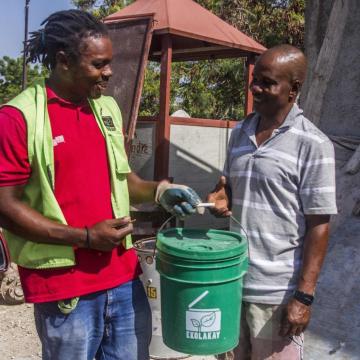
Photo: Julie Jeliazovski So far this year, EkoLakay has carried out two comprehensive satisfaction surveys in order to gather quantitative and qualitative feedback on the household toilet service. We were pleased to see that customers overwhelmingly reported improved safety, health, and....

Is There Demand for a Better Toilet?
Photo: Vic Hinterlang We know the global sanitation system is broken . Around the world nearly 2.5 billion people lack access to a toilet of any kind and even more than that lack access to a toilet that ensures safe waste treatment. Over the past 4 years SOIL has made in-home toilets accessible to....

New Research Shows SOIL’s Compost Often More Effective Than Chemical Fertilizer
Photo credit: Tony Marcelli Last June, we introduced our readers to Estrella Ardanza and Susana Perez Bejar, two Cranfield University students who have been busy studying the impact of SOIL’s Konpòs Lakay compost on native Haitian plants for their Master's theses. After months of hard work and....

200 Pounds of Compost, Over 7,000 Kilometers and 1 Partnership
In a neat new research collaboration with implications on how we use and market compost in Haiti, SOIL is working with researchers at Cranfield University in the UK to evaluate the agricultural impact of SOIL's compost (Konpòs Lakay). This work can be summarized in numbers: 2 students will research....
Scaling Up a Household Toilet Service – One Neighborhood at a Time
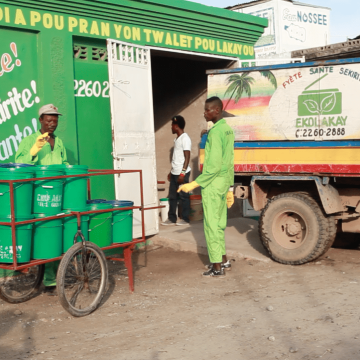
(Photo credit: Monica Wise) Over 2.5 billion people globally currently lack access to sanitation. As a heartbreaking result, over 2,200 children under the age of five die every day from preventable diarrheal diseases. Despite billions of dollars spent on sanitation interventions, the global....