SOIL's collection bed

Improving Collections with Human-Centered Design

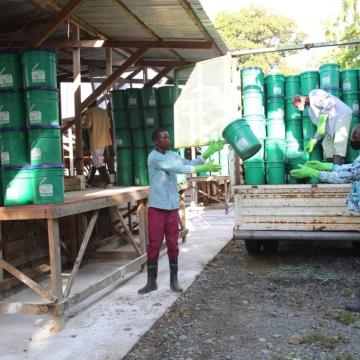
As a part of SOIL’s research and development initiatives and human centered design optimization, our research team has identified a number of projects to help improve efficiency for our service. This includes ongoing research on identifying ways to make the composting process faster and cheaper so....

Read more
compost

Composting Across Countries: A visit to Kompotoi in Switzerland

As SOIL continues to grow and expand our services in Haiti, we recognize the need to keep improving our operations efficiency, deepening our research, and exploring what others in the sector are doing. We love visiting our container-based sanitation and composting friends around the world, because....

Read more
Photo credit: Vic Hinterlang

Container-Based Sanitation: Including Vulnerable Populations in Climate Mitigation

photo credit: Vic Hinterlang Since its pilot, SOIL’s EkoLakay service has been carefully designed as a holistic model that can offer benefits beyond a simple household toilet. Rather than thinking solely about EkoLakay’s potential for individual impact, we’ve used sanitation provision as a starting....

Read more
Nature Climate Change

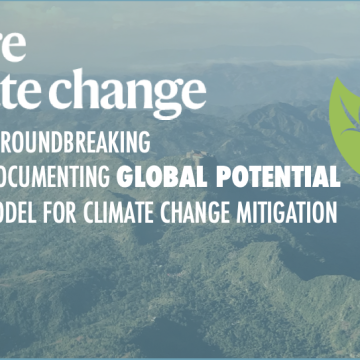
Nature Climate Change: Groundbreaking Research on GHG Emissions Offset of SOIL’s Sanitation Solution

Around the globe, 4.5 billion people lack access to safely managed sanitation with 1 billion of those living in densely populated urban settlements. Many urban residents rely on pit latrines where human waste is not safely managed and carries the potential to contaminate water sources and critically....

Read more
Marckindy onsite at SOIL’s composting waste treatment site in Mouchinette, Northern Haiti.

Meet Marckindy, SOIL's Composting Supervisor

Marckindy onsite at SOIL’s composting waste treatment site in Mouchinette, Northern Haiti. A couple of months ago we sat down with Marckindy Etienne, SOIL’s Composting Supervisor, to talk about his work, his connection to SOIL, and his thoughts on the role sanitation and compost can play in Haiti’s....

Read more
photo credit: Vic Hinterlang

Upcoming SOIL and CBSA Study: Comparing Costs of Urban Sanitation Solutions

photo credit: Vic Hinterlang With more than four billion people still lacking access to safe sanitation globally, we know that it’s going to take a multitude of innovative solutions to successfully tackle a crisis of this proportion. Citywide Inclusive Sanitation–the idea that a variety of....

Read more
Lukas and Jojo didn’t just observe the processes, they jumped in to get a hands on review of how it all worked!

Boosting Efficiency and Designing for Resilience

Lukas and Jojo didn’t just observe the processes, they jumped in to get a hands on review of how it all worked! As a leader in container-based sanitation, SOIL is always looking for ways to optimize our process and take the work we do to the next level. SOIL’s research team has been working on a....

Read more
Photo credit Vic Hinterlang

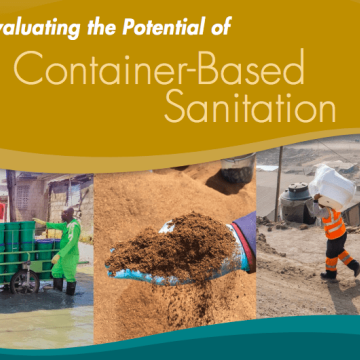
Frontiers in Environmental Science: Scaling Container-Based Sanitation

As SOIL continues to work towards expanding lifesaving sanitation in Haiti, we aren’t stopping there. In partnership with global communities and a network of container-based sanitation (CBS) practitioners, we are developing solutions we believe are poised for replication to provide sanitation in....

Read more
Photo credit: Leonora Baumann

The Guardian: The No-Flush Movement

Photo credit: Leonora Baumann As momentum grows across the planet for climate-positive sanitation solutions that harness the power of nature instead of depleting it, it’s exciting to see an increase in prominent media coverage of the regenerative sanitation revolution. A new article in the Guardian....

Read more
CBS

New World Bank Report Explores Impact of SOIL’s Sanitation Service

Business as usual in sanitation isn’t working, argues the World Bank. In cities experiencing rapid urbanization, they suggest that “the traditional approach to urban sanitation, premised on extending sewerage networks and building wastewater treatment plants, will not be sufficient to deliver....

Read more

Awards