The Cover Story
A few weeks ago, I wrote about SOIL's progress in developing a working model for a sustainable sanitation business in Haiti. As I mentioned, we've had some really exciting successes, but also some serious challenges - like our cover material.
If you've ever used a composting toilet, you know the importance of good cover material. For the uninitiated, cover material is basically the "flush" that keeps the toilet from getting gross; covering the waste with some kind of dry material prevents it from smelling and deters flies from visiting.
Here at SOIL, we call it bonzode (prounced bon-zo-deh, literally "good smell" in Creole), and it's a crucial piece of the SOIL business model. With thousands of customers each using a handful every time they poo in a SOIL toilet, we need a whole lot of it - and our demand will only increase as SOIL expands its services.
[caption id="attachment_4237" align="alignright" width="300"]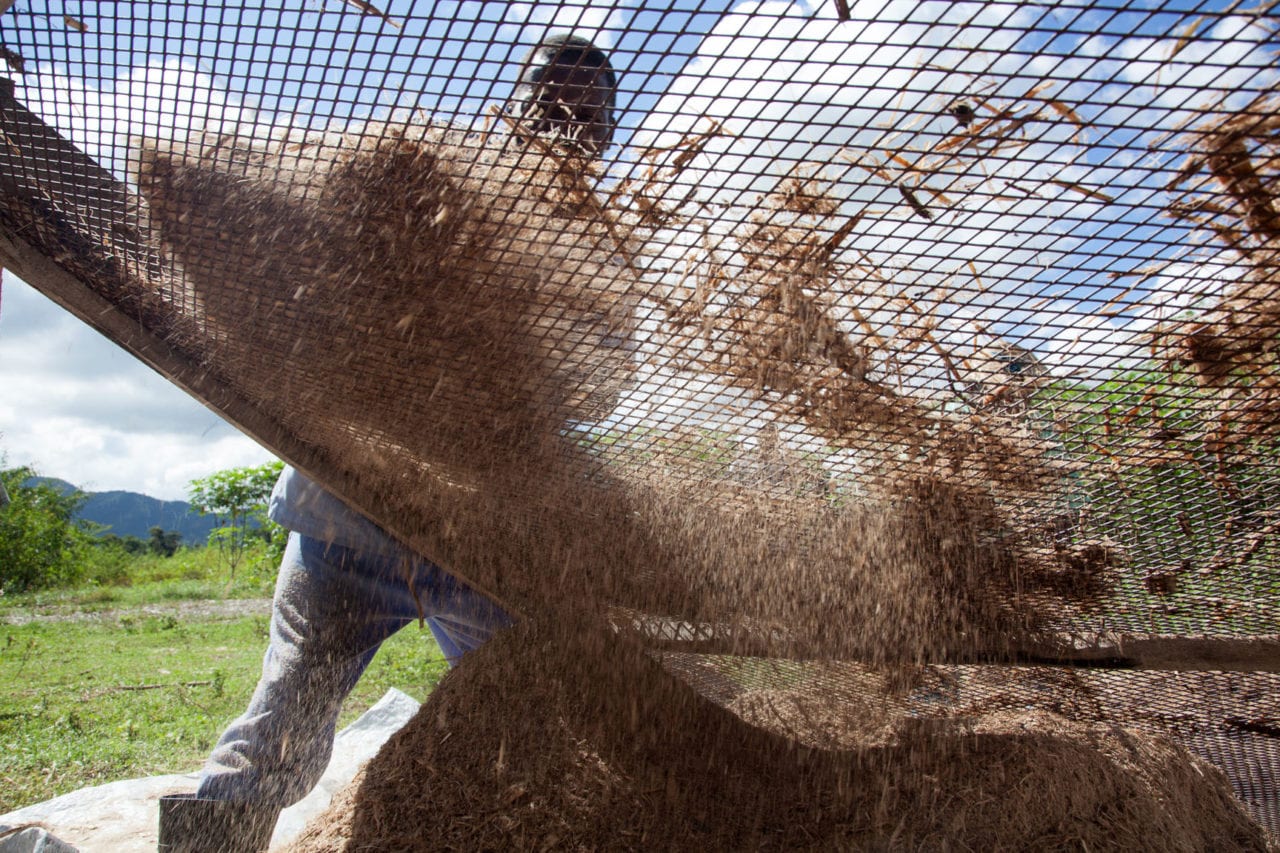 A SOIL employee sieves the bagasse to separate larger pieces (used at the waste treatment site) from the finer pieces (used in bonzode). Photo Credit: Jon Brack[/caption]
You can use a variety of things for cover material, but SOIL has been using a mix of ground peanut shells and bagasse (the woody bits of sugarcane left over after processing cane for rum production) since these waste products are in plentiful supply in Haiti. The materials are sifted to the consistency of sawdust, which not only covers well in the toilet but also composts easily during our waste treatment process.
On the one hand, this is a great way to re-purpose organic waste that is otherwise carted away and burned. On the other, it's made SOIL reliant on the goodwill of huge businesses that are ever-conscious of the bottom line. Unfortunately, realizing that their waste has value to SOIL is changing the way these businesses are offering their bagasse to us.
To avoid skyrocketing costs and/or disruption in our supply, our team is experimenting with mixing our cover material with - you guessed it - soil! We're testing out a 50% bonzode, 50% dirt blend in one of our office bathrooms, and so far it's great! It's working well in the toilet, and while we anticipate needing to add more carbon material for the composting process, nearly any kind of vegetable waste could be used at our waste treatment site.
A steady cover material supply is one of the biggest challenges of implementing ecological sanitation projects, so if SOIL can successfully use a substance as freely available as dirt, we'll be well on our way to establishing a working model. And the bonus is that we can use poor quality soil and convert it into rich fertile compost, transforming our own namesake to realize our mission!