Baptiste, the Bonzode Chef

If you have been following SOIL’s progress, you have probably seen that our EkoLakay household toilet business is growing bigger every day. However, signing up more customers requires having all of the necessary materials for the service. And one of our most critical inputs is our toilet “flushing” material, bonzode (read more about why cover material is so important here). Finding good materials to make the bonzode is important, and we need them to be cheap and sustainably available. In the past, we have used a mix of 75% sugar cane bagasse (the woody parts of the sugar cane that are wasted after processing) and 25% ground peanut shells. It was a great combination, but the businesses that have been supplying us with bagasse have begun re-using it themselves, so we’ve had to get creative and develop different bonzode recipes.
For the past few weeks, we have experimented with some ideas. Baptiste Mesa, our Compost/Agriculture Program Advisor, leads these experiments. After milling and mixing the materials, we test them out in the SOIL office bathroom to see how the employees like it. Last week, we experimented with a 50-50 mix of ashes (the remaining material after the sugarcane factory burns the bagas for energy) and ground peanut shells. This mixture would be convenient since we can get both materials in bulk very easily, but the testing showed it needs some modification. There was no bad smell (i.e., it covered well), but ashes easily get wet and make very dirty hands - which could be great for encouraging handwashing, but does not create a perception of cleanliness.
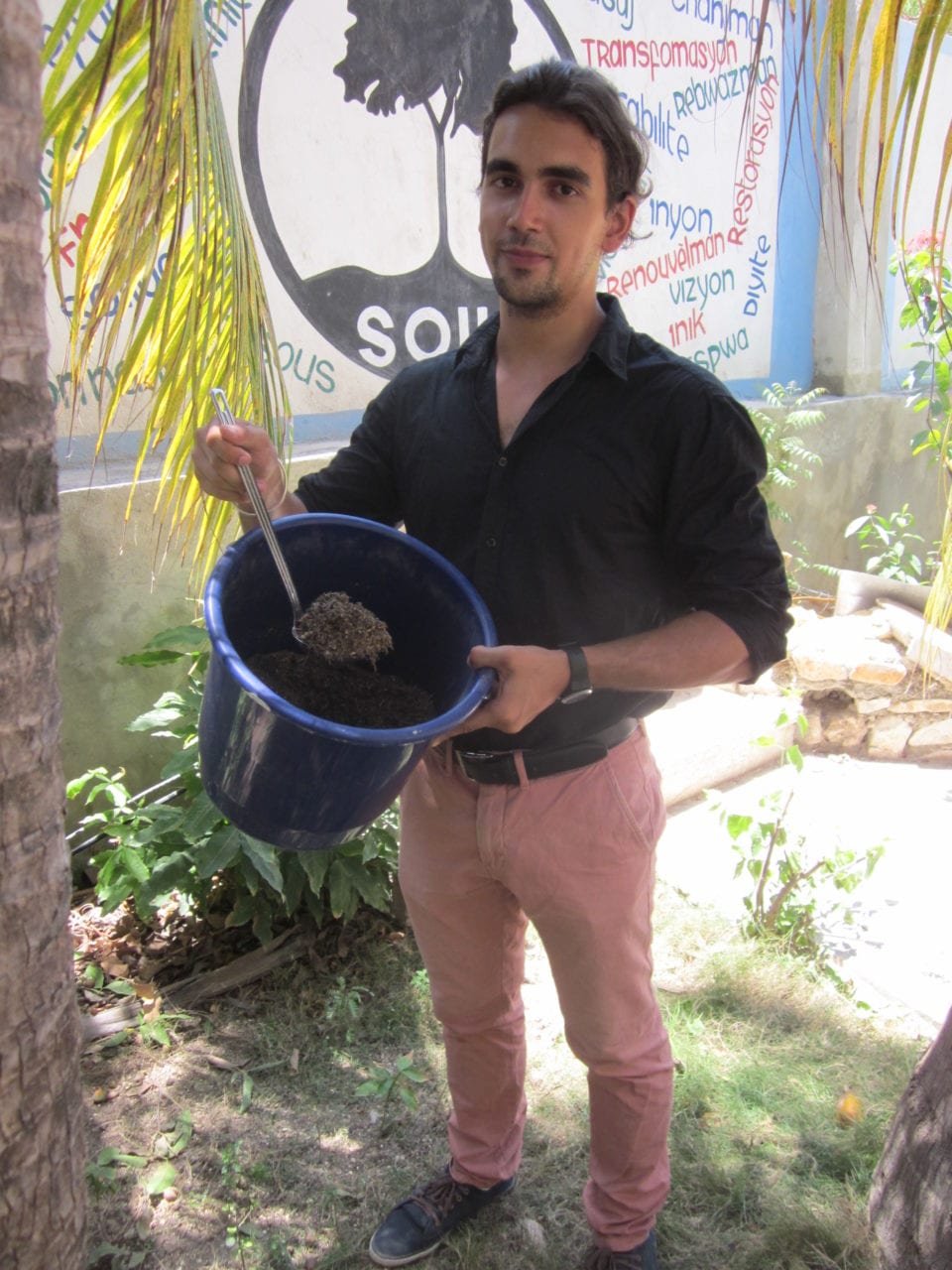 Our bonzode chef, Baptiste
This week, we are testing a mix of 25% ashes, 25% ground peanut shells and 50% ground leaves, which has a nice texture and doesn’t leave your hands dirty, but has its own challenge: you need A LOT of leaves to get a good volume of material. We’re in touch with a landscaping company about trying a sample of their agricultural waste, but we know from experience that a mix that is too woody won’t work; back in 2010 we also experimented with small wood chips discarded by a factory producing amyris oil. The wood chips were a great cover material, but they didn’t easily decompose in the composting processes. After nine months we were left with a pile of wood chips that smelled nice but weren’t great for building soil. According to Baptiste, the challenge is to to find the perfect combination that reduces smells, prevents flies, makes “flushing” easy and clean, and decomposes well, providing lots of carbon to feed the microbes that we depend on for safe waste treatment.. Baptiste compares his work to that of a chef who has to mix a lot of ingredients to find the perfect food. With this saying in mind, “Patience conquers all,” we are confident that he’ll succeed in developing the perfect recipe!