SOIL Joins Ministry of the Environment at Haiti Climate Goals Forum

Haiti's Ministry of the Environment has expressed its intention to recognize composting waste treatment as a climate mitigation strategy in the country's upcoming Nationally Determined Contribution (NDC) national climate report.
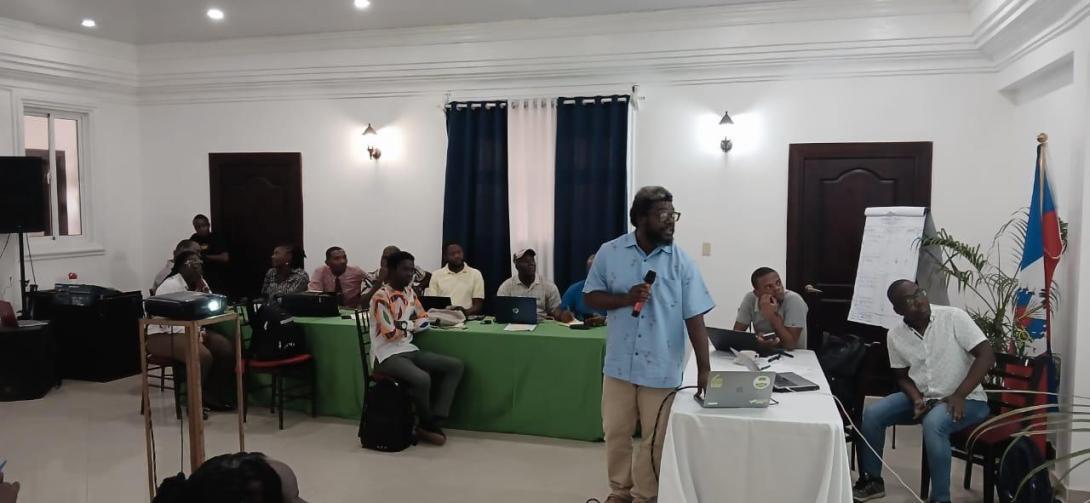
From March 16–18, government representatives and technical experts from across northern Haiti gathered at the Retrouvailles Hôtel in Cap-Haïtien for a workshop convened by Haiti's Ministry of the Environment on the country's Third National Communication on Climate Change — a report submitted to the United Nations as part of the global record of what countries are doing to address the climate crisis.
Romel Toussaint, SOIL Senior Manager, was invited to attend and present data on SOIL's container-based sanitation (CBS) operations. As evidenced by SOIL’s peer-reviewed scientific research, CBS effectively mitigates 126 kg of CO2 equivalent emissions per capita user annually (Nature Climate Change, 2020). At EkoLakay’s current scale of 4,200 households, that represents nearly 3,000 metric tons of CO2 equivalent emissions mitigated each year.
Despite contributing a negligible fraction of global emissions, Haiti bears a disproportionate share of the consequences of a warming planet — intensifying hurricanes, prolonged droughts, and flooding made worse by severe deforestation.
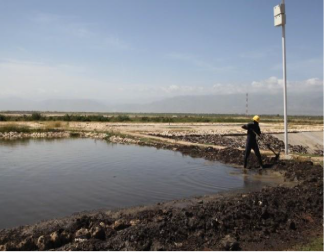
SOIL's sanitation service demonstrates how, in this context, sanitation can be a meaningful tool for climate mitigation. Human waste treated in waste stabilization ponds releases methane, a greenhouse gas more potent than carbon dioxide. Alternatively, when that waste is composted, methane emissions are significantly reduced. On top of that, the more than 350 metric tons of compost SOIL produces each year is returned to the land, rebuilding depleted soils and sequestering carbon further — completing a nutrient cycle that benefits both food production and the climate.
Our team looks forward to Haiti's Ministry of the Environment's recognition of composting waste treatment as a climate mitigation strategy in the country's upcoming Nationally Determined Contribution (NDC) national climate report and will continue to share knowledge on the climate mitigation potential of ecological sanitation practices.