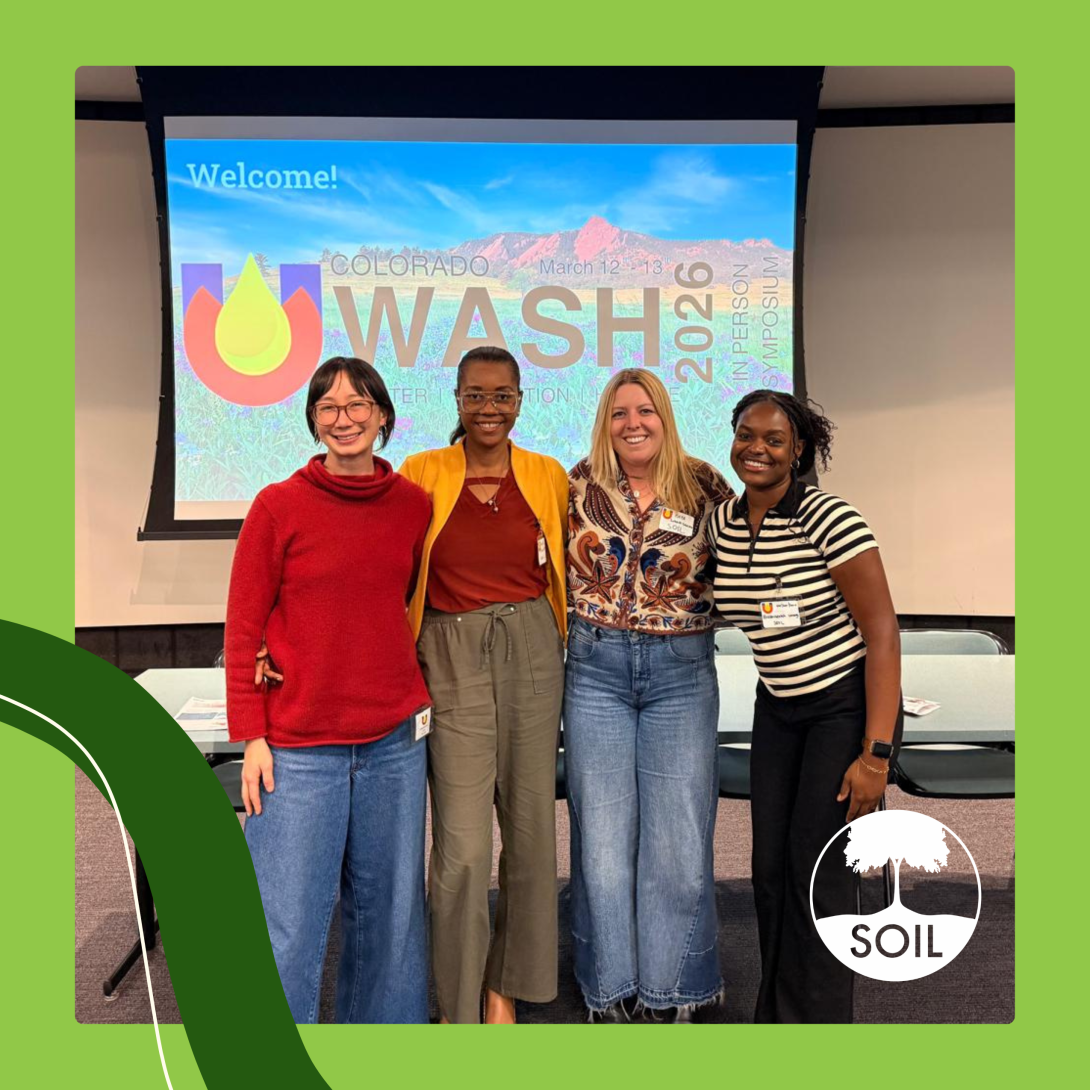
Research Team at Colorado WASH Symposium
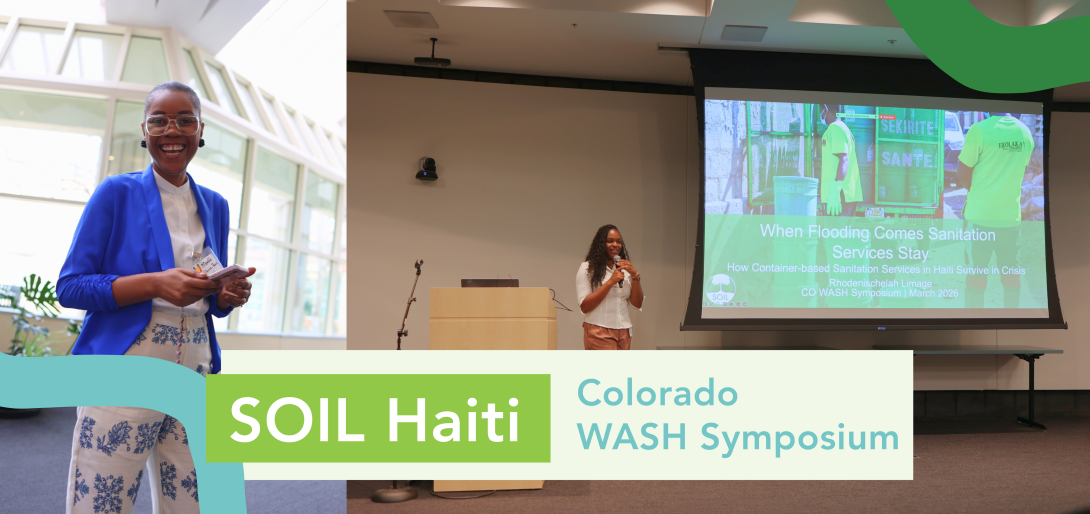
Members of the SOIL Research Team at the 2026 Colorado WASH Symposium
Last week, members of SOIL’s research team traveled to Boulder, Colorado to share recent findings with water and sanitation practitioners and researchers at the 2026 Colorado WASH Symposium (March 12-13).
Miselie Fanor Pierre, SOIL’s Research Project Manager, and Rhodenischelah (Rhode) Limage, Research and Innovation Intern each delivered presentations that explored two key questions guiding our sanitation service delivery:
- How can we ensure that sanitation services remain reliable during climate shocks and;
- How can we ensure access to sanitation for households with limited ability to pay?
When Flooding Comes, Sanitation Services Stay

Imagine your home being flooded—your mattress, belongings, and family photos soaked in water. Now imagine that, on top of this distress, you and your family no longer have a safe place to use the bathroom. At SOIL, we work hard to ensure that our services are still reaching households in these moments of need.
As climate change increases the frequency of extreme flooding in northern Haiti, maintaining uninterrupted sanitation services becomes even more critical for protecting communities from outbreaks of waterborne disease.
Rhode presented on SOIL’s flood response protocols and the communication systems our team uses to reach EkoLakay clients during flood events. Each process map showed how despite road blockages and broadband telecommunications failures, the SOIL team still finds ways to collect waste from households and safely transport it to our treatment site in Mouchinette. In some cases, this means going house to house to connect with clients, make sure that things are okay, and safely collecting waste containers. Additionally, because the Mouchinette treatment site sits beyond the region’s flood plane, it is less prone to flooding, helping ensure that waste can be safely treated without contaminating the surrounding environment.
During the discussion that followed, a participant asked if households who cannot afford sanitation services are still able to access them. The question was perfectly timed and set the scene for Miselie’s presentation later in the day on SOIL’s targeted service discounts.
Who Deserves a Discount?
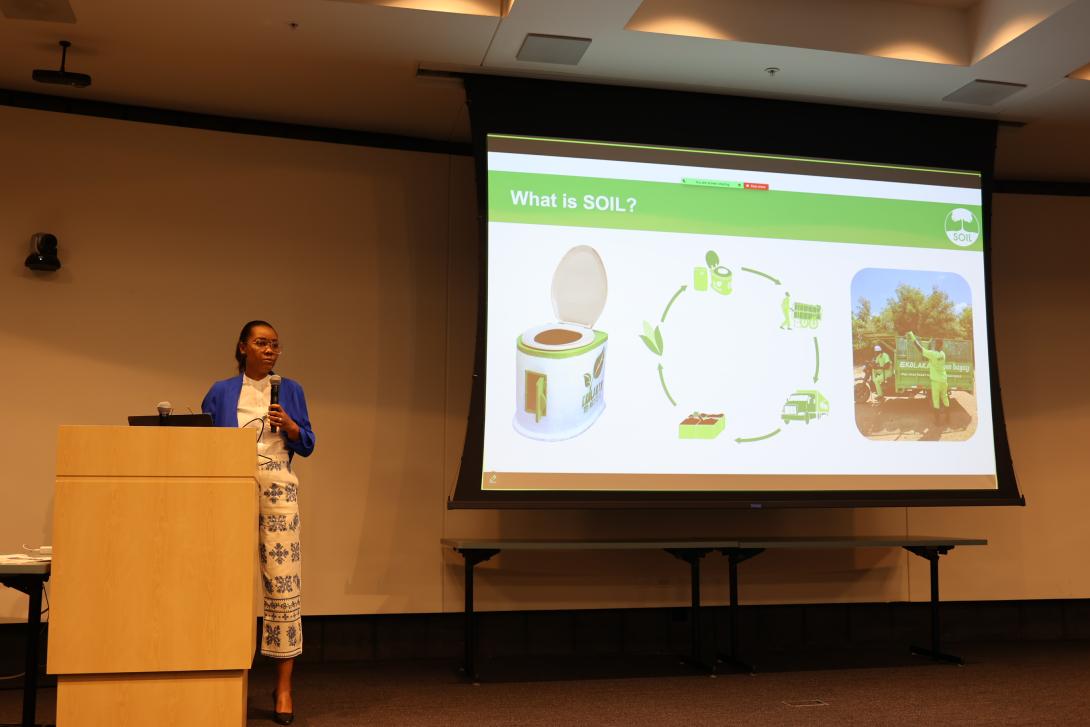
As SOIL expands the EkoLakay service, designing equitable subsidies for clients facing financial hardship has become a key priority. Miselie shared her findings from a study surveying more than 600 households across four neighborhoods in northern Haiti, combined with focus group discussions with community members that collected extensive qualitative data.
This research explored how to appropriately define household vulnerability, which indicators should be used to identify the households most in need, and how different targeting approaches would affect who receives support. Meeting these objectives is especially nuanced in a context where almost everyone is in need of assistance to meet their basic needs.
The findings highlighted that different methods—such as income-based indicators or sanitation access indicators—work best to understand the resources available (or unavailable) to households. By combining global best practices with approaches tailored by the insights of local data, SOIL is working to develop a targeted subsidy approach that expands equitable access whilst maintaining a sustainable paid service model.
We plan to roll out targeted service discounts later this year and we will share our findings with the SOIL audience and WASH community at large.
Aside from these presentations, the Colorado WASH Symposium also offered our team a valuable opportunity to exchange ideas with colleagues across the sector. We appreciated learning about approaches that consider the physical burden and time required to collect water when designing infrastructure, and new models for strengthening government partnerships through engaging community water boards and local stakeholders in decision making processes. We were also excited to hear updates from our friends at COVA on their progress expanding safe water provision through collaboration with governments. Read more about their work here!
SOIL is excited to continue to support our operations team with impact-first research and we remain committed to sharing our learnings globally. Stay tuned for the newest updates by subscribing to our monthly newsletter.