Wisner Represents SOIL at the Global Water Summit in Spain
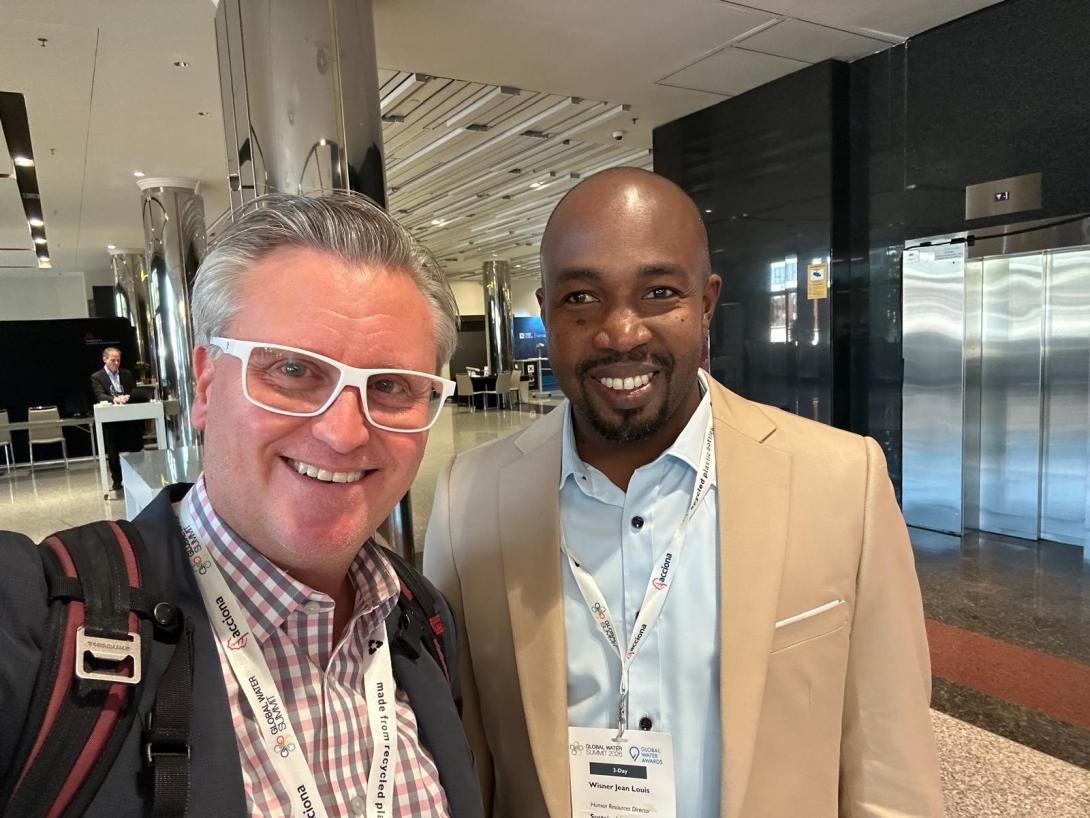
Wisner and John Sauer, Deputy Director at Population Services International.
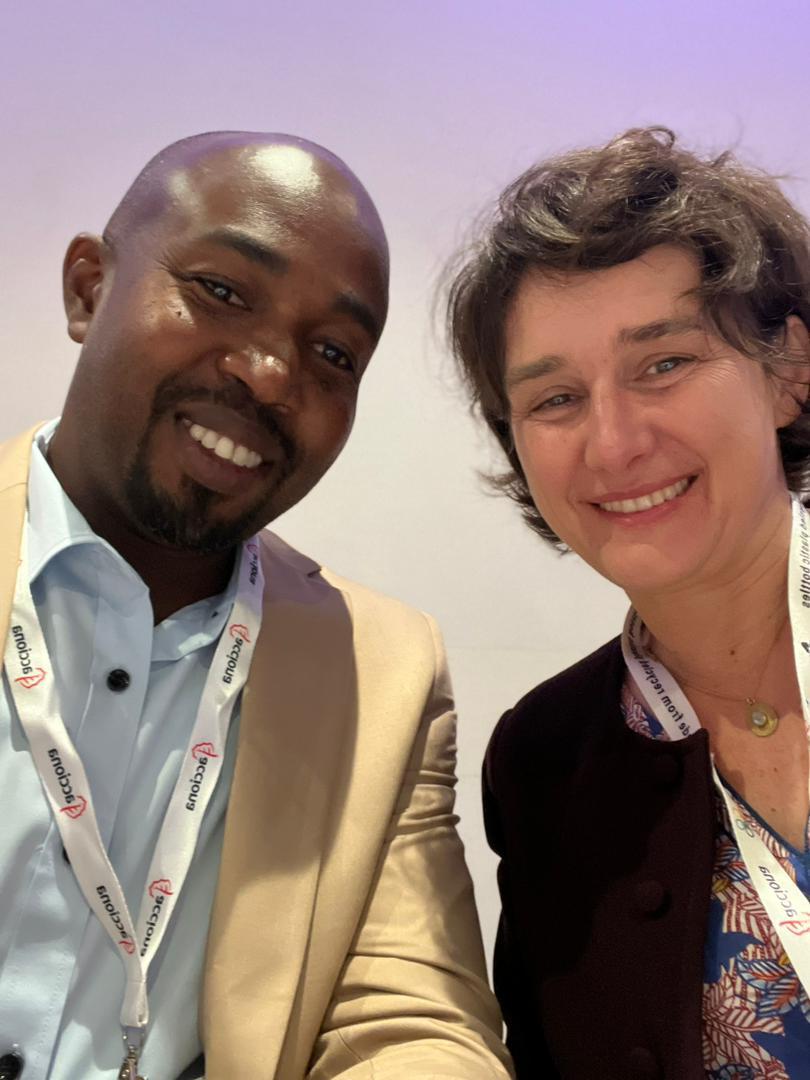
This week, SOIL’s Human Resources Director, Wisner Jean Louis, traveled from Cap-Haïtien to Madrid to participate in the 2026 Global Water Summit from May 18 - 20, where leaders from utilities, development banks, governments, and the private sector gathered to discuss the future of global water systems.
Held under the theme “Delivering the Water Transition,” the summit convened organizations from across the world to reflect on climate resilience, public-private partnerships, water reuse, financing mechanisms, and the growing pressures facing water infrastructure systems globally.
For SOIL, the summit offered an important opportunity not only to share our work in Haiti, but also to reflect on the evolving language and discourse on sustainability.
As climate instability intensifies, the summit created space for meaningful discussions around how institutions can move beyond short-term environmental commitments toward deeper, long-term investments in resilient public infrastructure and community wellbeing.
Sustainability is not an abstract concept, but something measured through whether families can access safe sanitation during floods, whether water systems remain protected from contamination, and whether waste can be transformed into resources that support environmental restoration rather than degradation.
Today, more than 4,300 households rely on SOIL’s EkoLakay container-based sanitation service. Through ecological sanitation and thermophilic composting, SOIL safely transforms more than 1,300 metric tons of waste into agricultural-grade compost annually while mitigating over 3,000 metric tons of CO2e each year through aerobic waste treatment processes.
SOIL is also proud to have partnered with the Global Water Summit and Aqualia as a carbon mitigation partner for the event, helping connect discussions around sustainability with direct investment in ecological sanitation services in Haiti.
As global conversations around the “water transition” continue to evolve, SOIL remains encouraged by thoughtful engagement across sectors in conversations around the social, environmental, and financial dimensions of sustainable infrastructure.