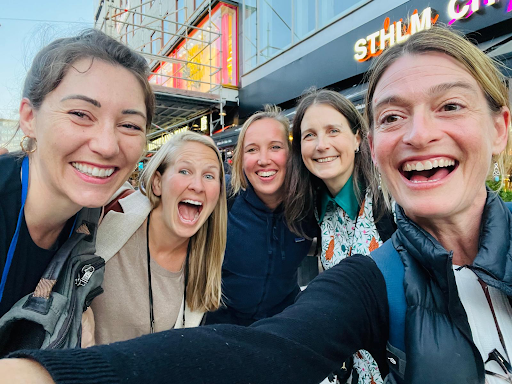
A Conversation with Tracey Keatman
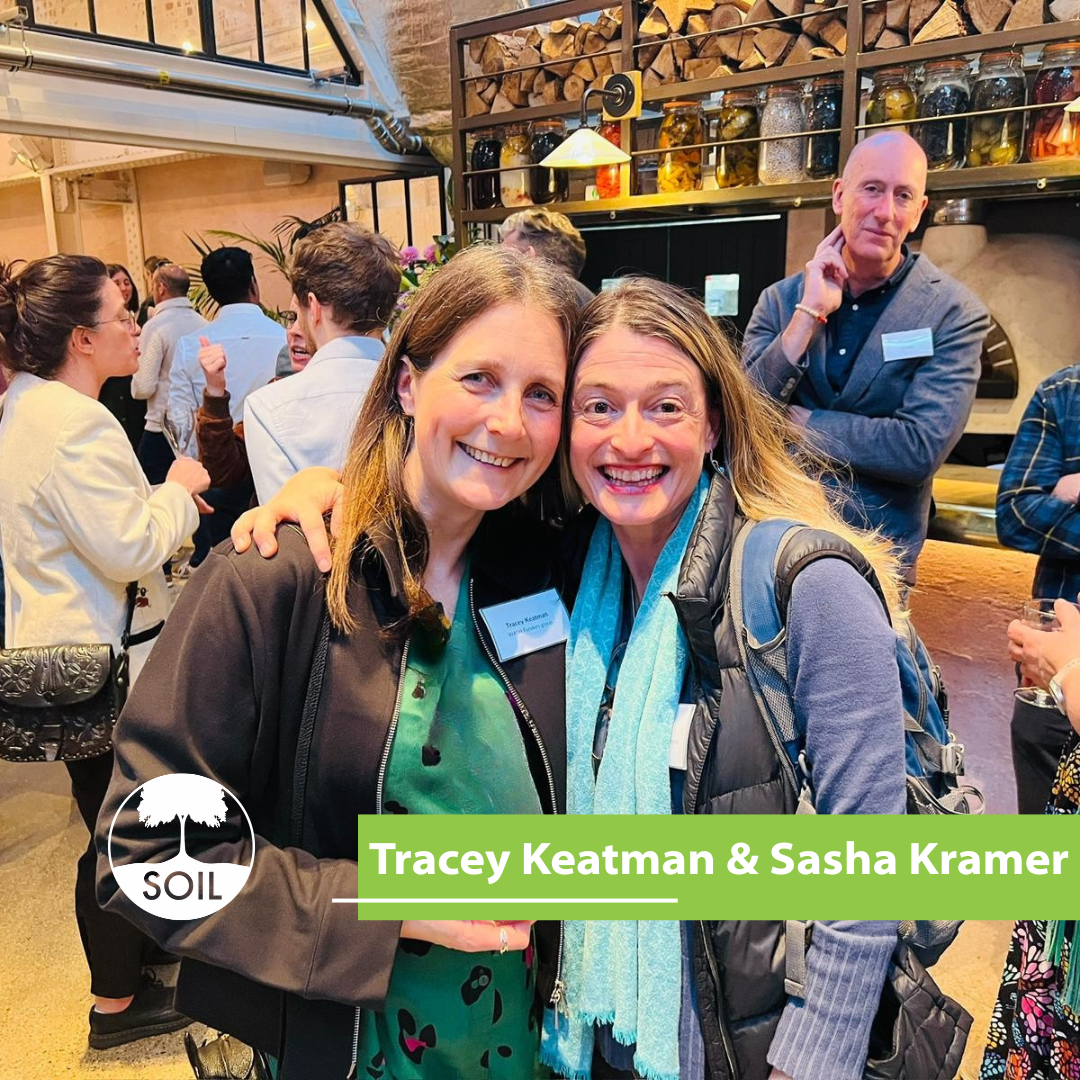
Tracey and Sasha at a Vitol Foundation event in London.
SOIL's success in delivering safe sanitation services is owed in large part to our network of dedicated and brilliant partners. One such comrade is Tracey Keatman, a development professional with over 25 years experience in public health, water and sanitation, and environmental sectors.
A WASH advocate that we deeply admire and respect, Tracey underlines that the way that we can truly move the needle in the right direction is by first understanding and moving people.
Where are you from?
I’ve lived in London for over 25 years, but I’m originally from Staffordshire in the middle of the UK - mainly famous for The Potteries and Robbie Williams!
How drew you into the WASH sector? What kept you in it?
During university, I spent a year living in Ecuador and then, after finishing my undergraduate studies, I spent 18 months traveling the length of Latin America from Los Angeles to Tierra del Fuego. It’s a bit silly, but I suppose that this was mostly because growing up I had always dreamed of seeing the Amazon rainforest. There, I visited communities that didn't have taps and toilets. This reality was something that I had simply not considered before - coming from a community where taps and toilets were more than abundant!
That experience conditioned my mind towards pursuing social and environmental work. Soon after returning from Latin America, I joined the team at WaterAid and then Business Partners for Development in Water and Sanitation (BPD). I completed an M.Sc. in Development Management while working at BPD.
I feel that once WASH grabs you, it just sort of really grabs you, you know? It’s a matrix of different specialties. You don’t have to be an engineer to make an impact—you can advocate, connect, and coordinate resources.
More than anything, my experience at BPD inspired me to think about how we address the fundamental question of “how do we get people—and institutions—to collaborate more effectively?”
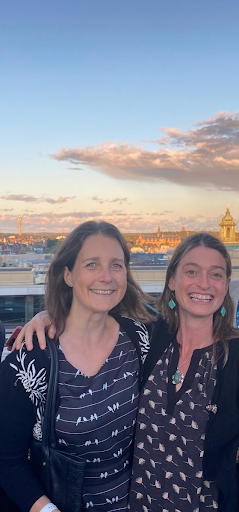
How did you first meet Sasha and SOIL?
I think it started with the Container-Based Sanitation Alliance (CBSA) around 2015–2016. A funder asked me to organize a meeting to explore what an alliance between organizations using this technology might look like.
In the first meeting we scoped out what CBSA could be, drafted some ideas, and then we brought our findings back to the funder. When I asked them “what’s next?” They looked at the plan and said “this!” and so we coordinated and launched it.
Sasha played a central role in those early days of gathering people together—driving coordination, elevating the alliance’s visibility, and involving SOIL in strategic research that bolstered the group’s credibility through publications with institutions like the World Bank and the World Health Organization.
Together, the Alliance got CBS on the map.
You chaired a recent Skoll World Forum panel on Public–Private Partnerships & Results‑Based Financing (RBF). Can you chat a little bit about this funding mechanism, RBF?
Results-Based Financing is something that has been talked about for a long time within the sector. Like most things, RBF has its pros and cons. One pro of RBF is that it shifts the focus from monitoring activities to measuring real-world outcomes. For example, this would look like evaluating the overall results of improved access to water rather than just counting the number of taps installed when determining if a project was successful or not. This change in mindset is important.
RBF encourages funders to move from attribution (“we did it”) to contribution (“we helped make it happen”). This framing aligns better with how outcomes are achieved—through joint action, not just single actors.
What role does government coordination play in long‑term service delivery?
A HUGE role. I’d go as far to say that if you are not planning on aligning your initiative with the government’s priorities, it is not worth the time. All water and sanitation efforts should align with national plans, standards, and indicators. If your monitoring metrics differ from the government’s, you’re creating more trouble than it's worth by duplicating systems that are cumbersome and hard to sustain.
And if national frameworks are weak, partners need to engage governments to drive sector-wide reforms and build the systems and policies needed for long-term development. Otherwise, you risk ending up with well-built yet abandoned “toilet graveyards” and broken infrastructure—because nobody took responsibility for maintenance.
Proper community engagement and professional service delivery are also essential. Developing and investing in high-tech solutions mean nothing if no one knows how to use them or is willing to pay for them. At the end of the day, people are what make things happen.
How do you balance donor vs. client expectations?
There’s pressure on donors for cost-effectiveness, but behind that reasoning there can be perverse incentives. We need to ensure people receiving services aren’t treated as passive recipients. True equity and inclusion means delivering the same quality of service we’d expect ourselves. I do believe that many in the WASH sector genuinely strive for fairness. Corporate funders also increasingly want long‑term impact—not just branding or ROI.
Philanthropy may be a drop in the ocean, but it catalyzes movements and can shift government priorities. The right catalyst at the right time—when a government is ready—can fundamentally move the dial.
What $ amount of investment would truly move this dial globally?
The total global ecosystem of WASH financing is massive, and philanthropy only contributes around 1%. A large majority of how WASH is paid for is through consumer subscriptions to water and sanitation services. The rest comes as subsidies from governments.
To truly scale these services and reach universal access, we need far more funding—especially if governments are debt-constrained. Private finance alone isn’t enough; long-term delivery will depend on user-fees. While it is a bit of a drop in the bucket, philanthropy plays a symbolic and catalytic role—de-risking investments, building models, and driving collective action–it is about proving that solutions exist. We know that it is not and will never be enough, and yet we continue to fight for better services for all because we believe that these things are indeed achievable.
There is a popular WASH economist Guy Hutton who models the costs for universal sustainable services: even in these predictive models, funders are “not last-mile providers”—they are catalysts who leverage capital and innovation.
What gives you hope and inspiration in this sector?
Values-driven collaboration inspires me—organizations that come together across sectors to learn, finance, and raise awareness gives me real and tangible optimism. WASH excels in this—it’s a field full of passionate, solutions-oriented individuals and community leaders (and not to mention, a lot of truly incredible women).
Tracey Keatman’s friendship to SOIL and her decades-long commitment to the WASH sector exemplifies how passion, partnership, and dynamic financing models can transform communities. As SOIL seeks to align with national systems already in place in Haiti—and focus on outcomes over outputs—we hope to continue to make a long-term impact in sanitation access and community health.
Thank you Tracey for being a part of SOIL’s journey and we look forward to what we achieve together next.