First Year of Government Partnership with SOIL is a Success!
In Haiti, a partnership between DINEPA and SOIL is offering a practical model that strengthens public capacity and increases customer demand—building a sanitation sector from the ground up.
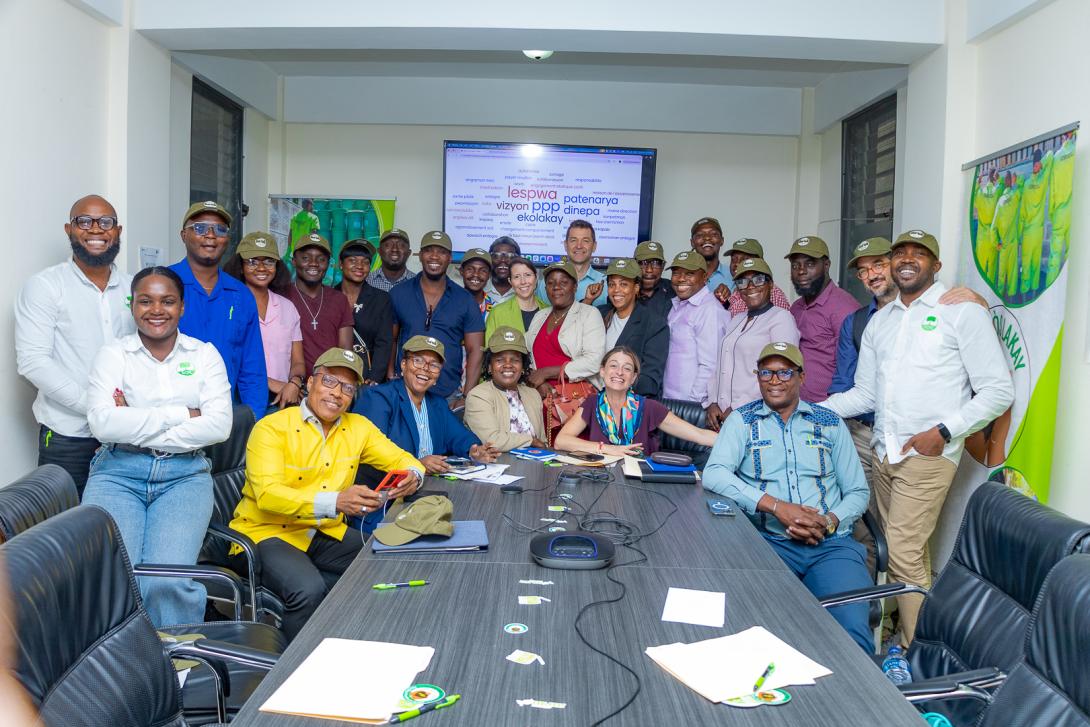
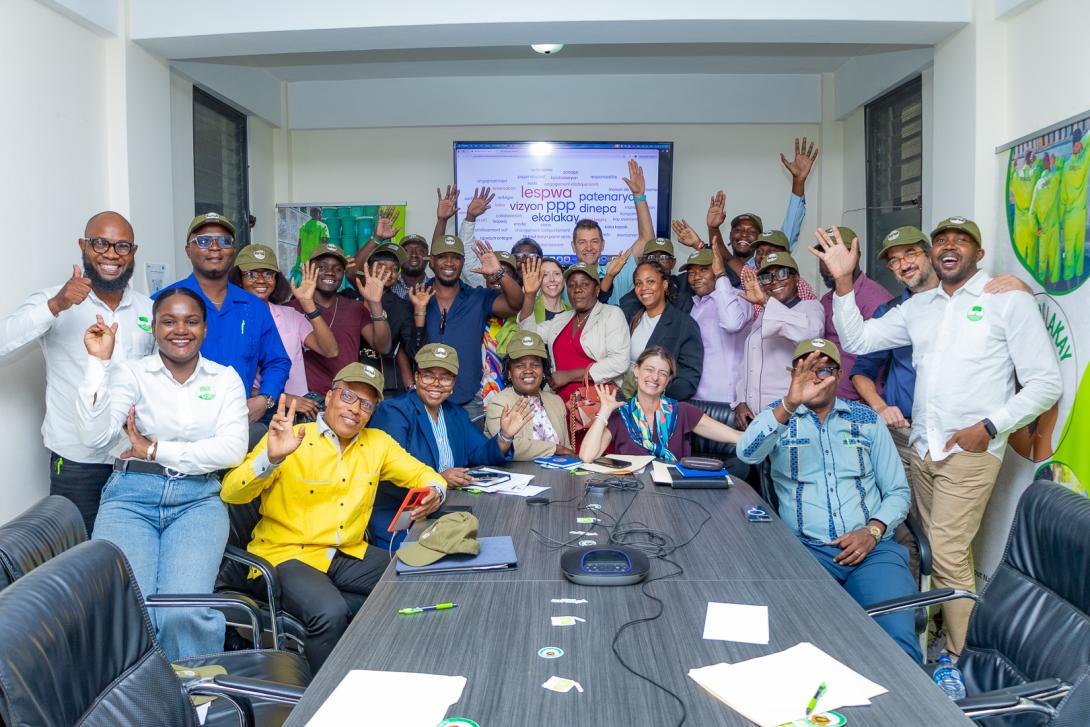
On October 8, 2026, Haitian government officials gathered at the OREPA Nord office in Cap-Haïtien to review the first year of results from a public-sector contract with SOIL designed to deliver container-based sanitation services in northern Haiti.
Through this first year of a groundbreaking partnership, DINEPA, Haiti’s National Directorate for Drinking Water and Sanitation, and SOIL achieved 100% of the outcomes specified in the contract. Under the contract’s results-based financing (RBF) model, DINEPA pays SOIL, the service operator, for independently verified outcomes. DINEPA, with budgetary support from the Inter-American Development Bank (IDB), covers the public sector costs of sanitation ($21 per household per month) for 1,428 active households on the service. Active status is confirmed through third-party verification of payment receipts and field visits.
Sanitation, waste, water, agriculture, health, and climate can no longer be handled as separate issues. Haiti must move from isolated projects to structured national programs able to show measurable results on the ground. For DINEPA, the contract shows that service financing can deliver measurable, independently verified outcomes creating positive impact in a broad range of sectors, stimulating customer demand and making the case for increased public investment in sanitation.
Haitian ministers recognize sanitation’s success
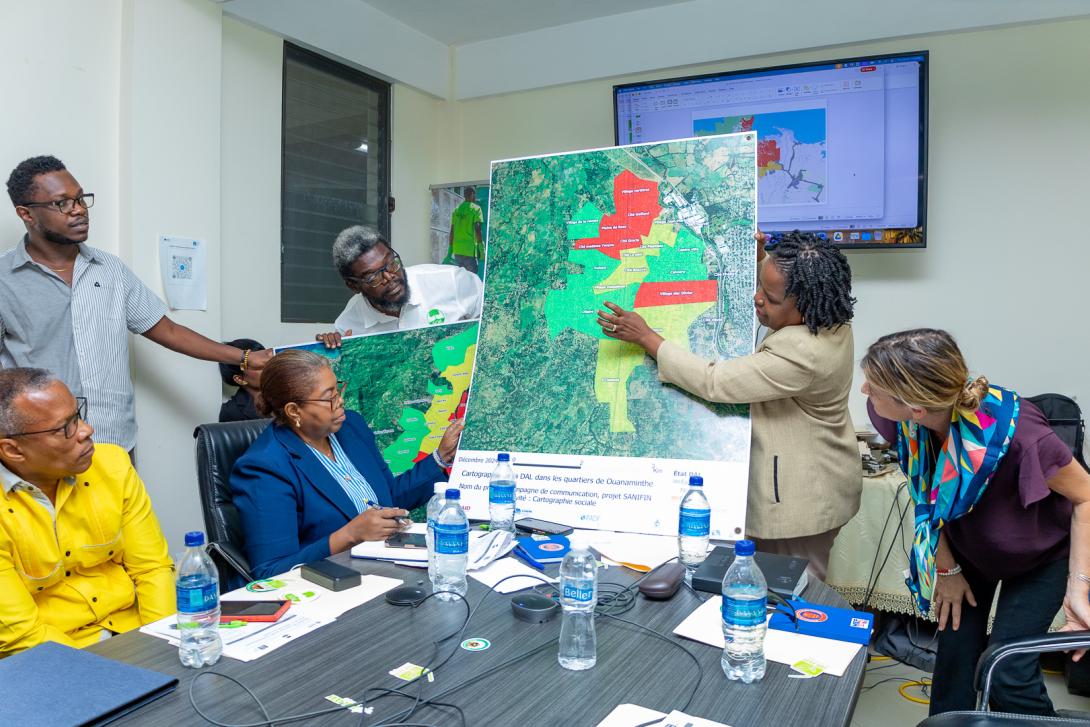
The meeting, led by DINEPA and OREPA Nord, brought together representatives from the Ministries of Economy and Finance, Environment, and Planning and External Cooperation, regional authorities, the National Solid Waste Management Service (SNGRS), the Vice- Delegue of Cap-Haitien and the mayors of Caracol, Quartier-Morin, and Limonade.
In addition to presentations from DINEPA, OREPA Nord and SOIL, the meeting welcomed voices from other sectors as well as invited participants who could speak to the global impacts of the partnership.
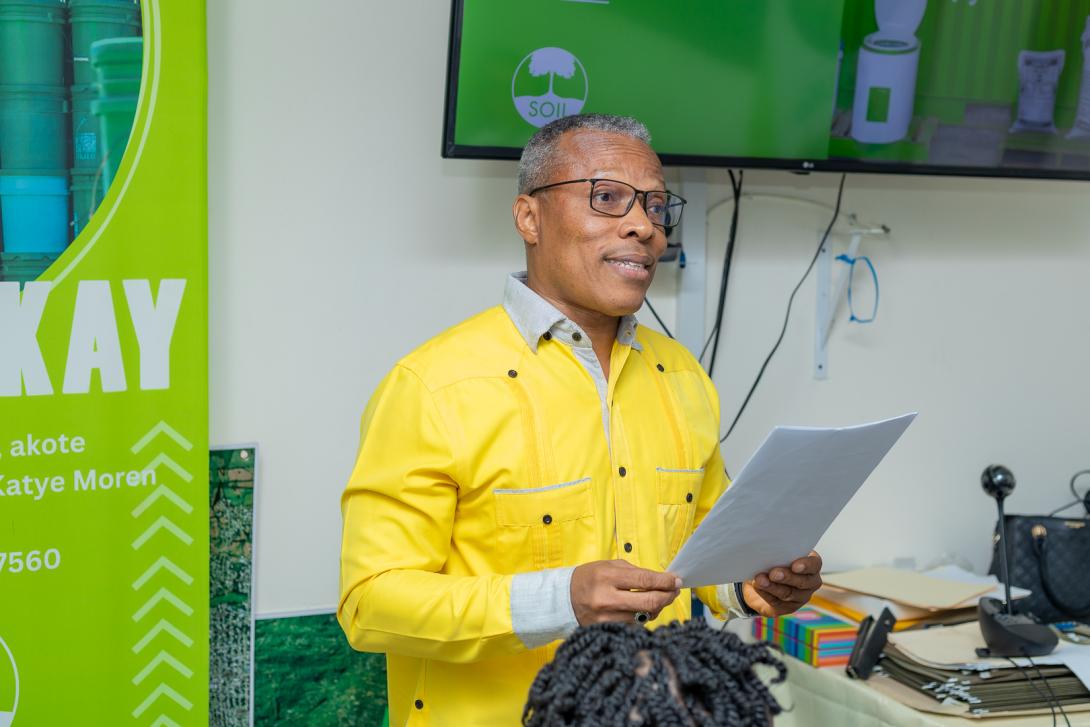
Astrel Joseph, Chargé de Mission and Operational Focal Point for the Global Environment Facility (GEF) and the Green Climate Fund (GCF) at the Ministry of the Environment and a member of the Council of Ministers, framed sanitation as a matter of urgency for the public sector.
“Sanitation today is a question of public health, human dignity, the protection of our environment, climate resilience and, above all, territorial governance. Our Ministry is not merely responsible for observing environmental degradation. It must also help shape public policies that prevent pollution, protect natural resources, restore ecosystems, and support local authorities and other sectors in the ecological transition. When a city cannot manage its waste, stormwater becomes contaminated. When ravines are blocked by waste, the risk of flooding increases. When soils are degraded, their capacity to retain water diminishes. This is why sanitation policy must be integrated into our national environmental and climate policy.”
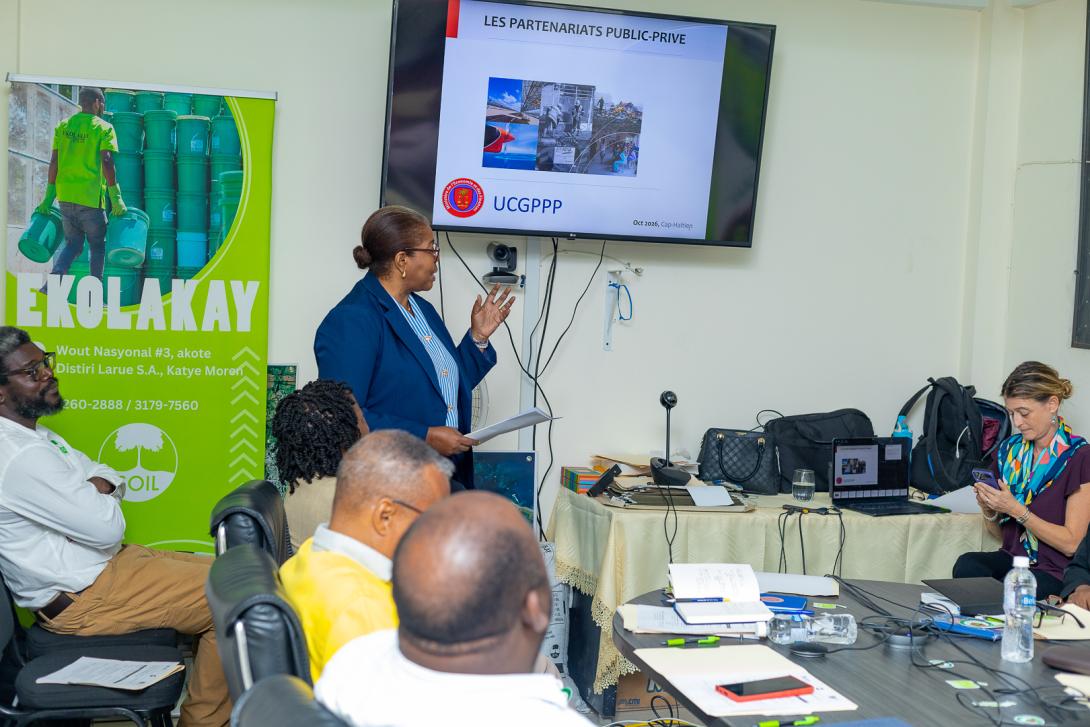
Rose-Lourdes Élysée, Deputy Director General at the Ministry of Economy and Finance and head of its Public-Private Partnership Unit, delivered a powerful presentation on the role of public-private partnerships in Haiti, noting that the contract between DINEPA and SOIL is a model for other sectors seeking innovative ways to deliver essential services in Haiti.
Rémi Kaupp, Executive Director of the Container Based Sanitation Alliance, gave a presentation on Haiti’s pioneering role in inspiring CBS services globally.. He outlined how this first public contract for container-based sanitation (CBS) services is inspiring authorities and financiers in Kenya, Madagascar, and Peru, showing how professional and efficient sanitation services are possible in informal settlements.
And Christina Jean Louis, from IDB Lab, gave a presentation highlighting the leading role the sanitation sector in Haiti is taking with innovative contracting for service delivery, a potentially transformative way to move from NGO-financed services to a public service model which leverages successful innovations.
From an NGO to a Public Service
SOIL began exploring RBF in 2017 as a deliberate move from activity-based grants to service-based payments, treating it as a bridge strategy that delivers reliable, scalable sanitation while repositioning SOIL as a government-contracted public service provider rather than a grant-dependent NGO.
To advance this, SOIL formalized a coalition of outcome funders alongside DINEPA (the Vitol Foundation, Cartier Philanthropy, The Waterloo Foundation, Grand Challenges Canada, and The Coca-Cola Foundation) to prove the model and de-risk early government participation. Fast forward to today, and SOIL and DINEPA have demonstrated that public partnership with an NGO can deliver concrete results.
While government representatives have expressed their interest in bringing the service to more communities, securing the institutional funding needed for scale will take time and require inter-ministerial coordination. While this process is underway. SOIL will work with partners to reduce operating costs and develop additional revenue streams, ensuring that public funding can reach the greatest number of people possible. After 3 years of rapid growth, the SOIL team is inspired by the challenge of streamlining systems and improving cost reduction while simultaneously partnering with DINEPA to seek institutional funding.
Complementary revenue streams are slowly expanding without compromising household affordability for the service: EkoMobil, SOIL’s portable toilet rental service, is a modest but higher-margin cross-subsidy, Konpòs Lakay compost sales cover a relatively low percentage of service costs but carry outsized weight for government engagement and environmental positioning, and climate revenue contributes roughly 6 to 8% through carbon-mitigation partnerships that value mitigated CO2e emissions at about $30 per metric ton. Philanthropic funding plays an important role in this transition, helping to maintain the financing runway that sustains service delivery as public sector financing is secured.
Haiti’s experience offers practical lessons for other CBS providers globally: when the government sets the direction, contracts for results, and works with experienced service providers, partnerships can make measurable progress on national and regional sanitation goals.
As stated by Dr. Barabara Evans, chair of Public Health Engineering at the University of Leeds, “SOIL has pushed the sanitation sector globally to implement innovative, low-cost environmental technologies and to rethink how to sustainably reach low-income customers.”
Haiti’s sanitation success has lent inspiration to governments around the world. In July 2026, Fresh Life, operating in Kenya and Zambia, hosted SOIL and DINEPA at the third meeting of its Results-Based Financing Advisory Committee in Nairobi. Before Kenyan ministries, regulators, Nairobi’s water utility, and sector partners, SOIL and DINEPA presented Haiti’s transition from donor-supported sanitation to a government-funded RBF contract, and the exchange opened a discussion about how Kenya could chart a similar path.
For off-grid sanitation providers around the world, Haiti now offers something rarer than another successful pilot: evidence that a public institution can contract for household sanitation as an ongoing service and pay for it against verified outcomes, creating a broad range of social and environmental impacts. We are deeply grateful that this first was achieved in Haiti. It belongs to the Haitian public servants who have championed sanitation as a public responsibility, and to the SOIL team members who show up for clients week after week in one of the world’s most complex operating environments.
“What I am most proud of is that we have a service that our customers value. That, combined with government and philanthropic financing, has allowed us to grow the service 228% since launching the RBF mechanism. We are very grateful to the many supporters who have provided patient capital over the years to allow us to provide this service in a fragile context and we are confident that, through sustained collaboration and in partnership with government ministries, we can expand our impact in the coming years leveraging different sources of financing to ensure access to one of the most fundamental human rights.”
- Sasha Kramer, SOIL’s Executive Director